
01 45 60 28 24
Thiais Cancer CentreRadiotherapy · Val-de-Marne
Book an appointment
Your patient pathway

Know what to expect, step by step.

Radiotherapy does not start on the day of the first irradiation. Consultation, CT imaging, contouring, planning and setup allow us to prepare your treatment precisely before it begins.

Medical consultation in a reassuring setting
Step 01

First contact

Reception organises your first consultation and provides practical guidance.

What happensOrganising the first appointment
What to bringYour contact details and requested information
Who?The reception team
See this step in detail ↓
Your roadmap

At every step: why it matters, what to prepare and who supports you.

01

First contact

Contact reception to arrange your first consultation.

What to bring

Your contact details and the practical information requested by reception.

With whom?

Reception guides you and explains the secure channel to use if documents are needed.

02

Consultation with the radiation oncologist

The doctor reviews your situation and explains the treatment aim, alternatives, organisation and possible effects.

What to bring

Your questions, a list of current treatments and any specific information requested by reception.

With whom?

The radiation oncologist. Your treatment plan forms part of the cancer care pathway and may be discussed at a multidisciplinary meeting.

Doctor and patient talking during the first consultation
The first consultation: understand treatment and ask your questions.
03

Planning CT scan

The planning CT scan is performed in the position used as a reference during treatment. It provides images for defining treatment volumes and organs to protect. Immobilisation aids may help reproduce the same setup at every session.

What to bring

Depending on the treated area, urinary, bowel or breathing instructions may be needed. Follow them carefully on the scan day so the images match the intended treatment conditions.

With whom?

Radiographers position you and acquire the images; the medical team defines preparation requirements and the information needed for planning.

Learn more about the planning CT scan →

04

Contouring and dosimetric planning

Using the CT images, the radiation oncologist outlines treatment volumes and organs to protect. Medical physicists and the dosimetry team then build a plan to distribute the prescribed dose precisely. The plan is optimised and checked before approval.

What to bring

You generally do not need to attend this stage. Its duration depends on treatment complexity and the checks required before irradiation starts.

With whom?

The radiation oncologist, medical physicists and dosimetry team work in sequence on the same treatment plan.

Understand contouring, planning and dosimetry →

05

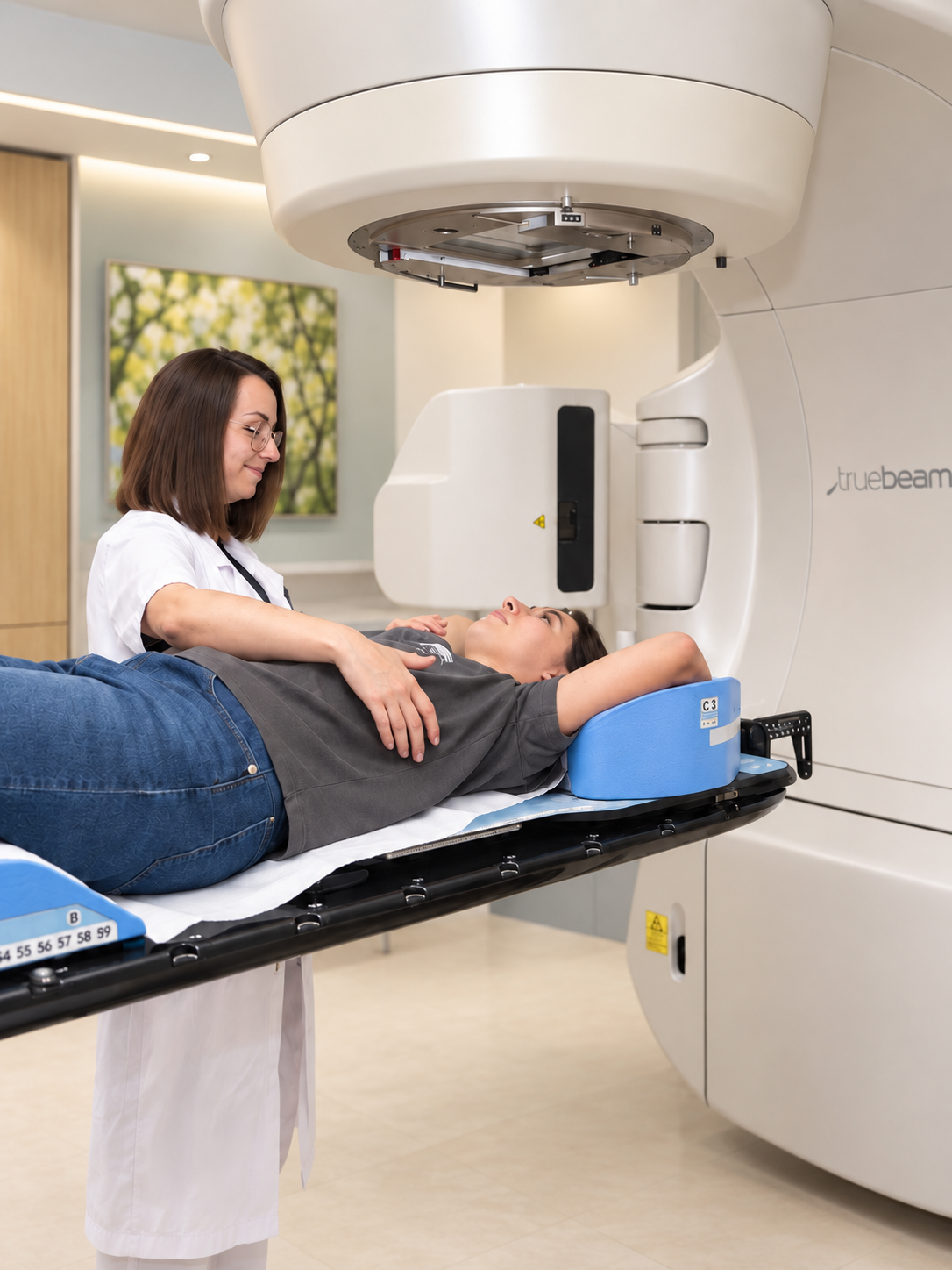
Treatment setup

Setup is a verification stage before irradiation begins. You are positioned on the radiotherapy machine as defined at the CT scan. Verification images confirm that positioning is reproducible and matches the approved plan before treatment starts.

What to bring

Follow the same preparation instructions as for treatment if breathing, bowel or bladder requirements have been prescribed.

With whom?

Radiographers perform setup and imaging checks; approval follows the treatment protocol.

A patient being positioned under TrueBeam before a radiotherapy session
Setup precisely reproduces the planned position and checks alignment before irradiation starts.
06

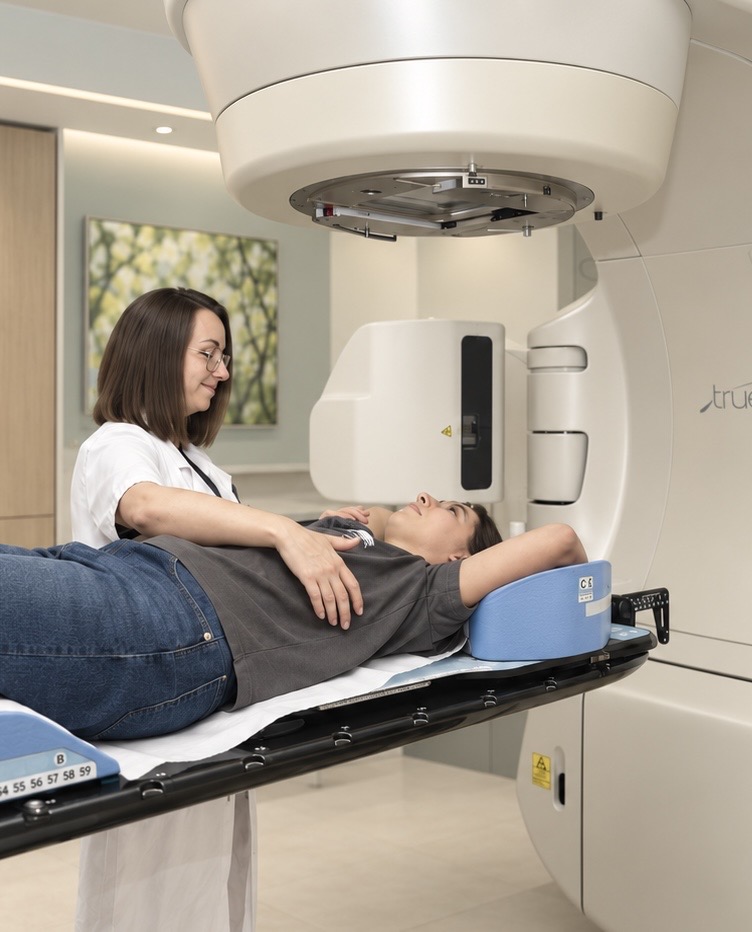
First session

The first session reproduces the CT planning position. Before irradiation, the team checks your identity and setup and performs imaging required by the protocol. Necessary corrections are made before delivering the day's dose.

What to bring

Arrive at the stated time and follow the preparation instructions for your sessions. Tell the team about pain, discomfort or difficulty maintaining position.

With whom?

Radiographers position you, perform verification imaging and deliver treatment according to the approved plan, with medical approval as required by the protocol.

See a first session in detail →

Patient on the treatment couch with a radiographer during setup before radiotherapy
Positioning and checks before the first irradiation.
07

On the day of a session

At each session, you are positioned as defined during planning. Verification imaging is systematically performed before every session to check positioning and make any necessary corrections before irradiation.

What to bring

Follow preparation instructions and report changes that may affect positioning or the ability to reproduce the planned setup.

With whom?

Radiographers carry out positioning, verification imaging and treatment delivery according to the approved protocol.

08

Monitoring during radiotherapy

A medical consultation is arranged every week during radiotherapy. It assesses treatment tolerance, manages side effects, answers your questions and adapts care if needed.

What to bring

Write down symptoms, difficulties or questions arising since the previous consultation so you can discuss them with the team.

With whom?

The radiation oncologist and medical and allied health teams, with supportive care according to your needs.

09

End of treatment

The last session completes the planned irradiation, but some effects may persist or appear in the following days. The team gives you advice and explains which symptoms should prompt further contact.

What to bring

Keep your end-of-treatment instructions, useful contact details and follow-up appointments.

With whom?

The radiation oncologist and Centre team organise the transition to monitoring and coordinate with other cancer care professionals.

10

After radiotherapy

After radiotherapy, follow-up monitors recovery, early or late side effects and disease progression. Its frequency and necessary tests depend on your situation and other treatments received.

What to bring

Follow the monitoring schedule, record new or persistent symptoms and know whom to contact between appointments.

With whom?

Your radiation oncologist, medical oncologist, surgeon, GP or other specialists according to your pathway.

Understand follow-up after radiotherapy →

Patient information

This pathway describes the main stages of external beam radiotherapy. The precise order, tests and schedule are personalised to your situation.

Read the full guide →